

What is CBCT, and how does it differ from an ordinary dental X-ray?
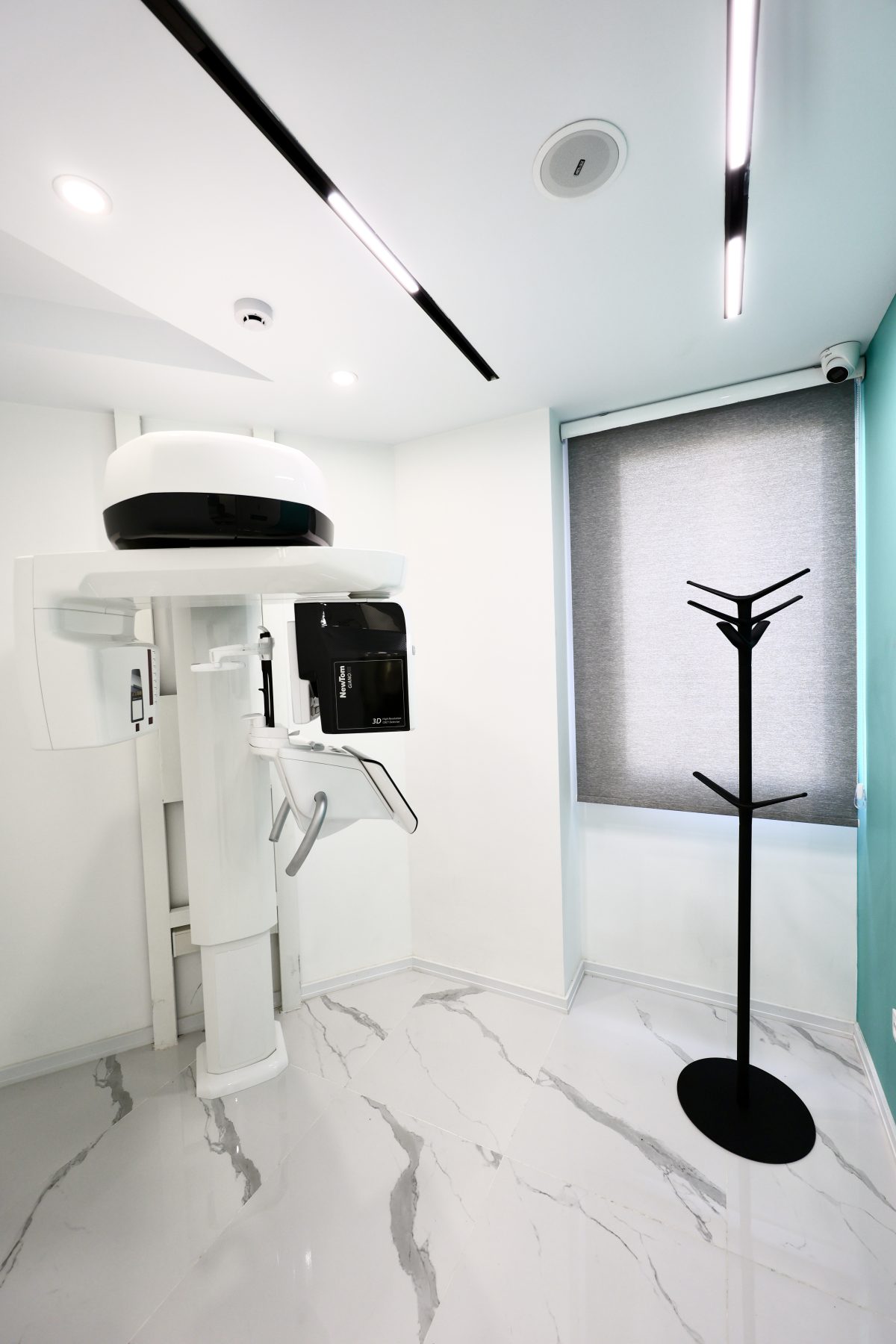
CBCT builds a three-dimensional image of the jaws and teeth, allowing structures to be reviewed in three planes. Here is how it differs from conventional radiography, and when it is used.
When your dentist requests a CBCT scan, a common question is how it differs from an ordinary dental X-ray, and why a different method is needed this time. Here is a plain-language answer.
Conventional radiography: one image, one angle
In conventional dental radiographs such as periapicals or panoramics, the X-ray beam passes through the region from one direction and produces a two-dimensional image. Everything in the beam's path is superimposed, which means a small lesion behind a root can be hidden.
CBCT: the same region, in three planes
In CBCT the unit takes dozens of images from different angles in a single rotation, and software reconstructs them into a three-dimensional volume. The radiologist can review that volume from the front, the side and above, and generate a precise cross-section wherever it is needed.
When is CBCT needed?
- Implant planning: to measure bone height and width and determine distances to the inferior alveolar nerve or the sinus.
- Impacted teeth: to establish the exact position of the tooth and its relationship to adjacent structures before surgery.
- Jaw lesions: to define the extent and margins of cysts and bony lesions.
- Complex root canal treatment: when the number or shape of canals is unclear in two dimensions.
Is the dose higher?
Yes — a CBCT delivers more dose than a simple radiograph, though still far less than a conventional medical CT scan. What matters most is the size of the imaged volume: the smaller the field of view, the lower the dose. That is why we always choose the smallest field of view that answers the clinical question.
To compare your imaging dose with natural background radiation and flight hours, try the radiation calculator.
What happens on the day?
The scan itself takes only seconds. You stand or sit with your chin on a rest and stay still while the unit rotates. Remove metal items beforehand so they do not create artefacts on the image.